
Following Without Surrendering Judgment
I ChingThis flow traces the changing relationship between leaders and followers as allegiance becomes either reciprocal service or dangerous dependency.
increasing Bearing strength in each event
 decreasing
Bearing strength in each eventdecreasingA Leader Seeks Associates
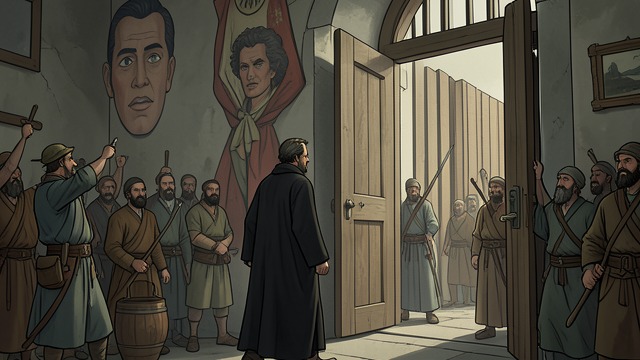
A Public Search for Companions
Leaving the private gate
The first line shows a figure changing the object of pursuit and going beyond his gate to seek associates. Legge praises the public spirit implied by looking beyond private advantage.
Following begins with a choice of company.
Merit through right attachment
The line promises good fortune only if the figure remains firm and correct. A person needs companions, but not every attachment deserves loyalty.
The bond is formed through shared purpose rather than mere proximity.
The Lesser Attachment Wins

A Choice Between Guides
The wrong companion
The second line clings to a little boy while letting go of the older and more experienced man. Legge identifies the contrast as a failure of judgment in choosing whom to follow.
A close attachment can be inferior to a more demanding but wiser relation.
Affection is not enough
The line leaves its unfavorable outcome implicit. Its warning is relational: emotional ease may draw a person away from mature guidance.
Following becomes an ethical choice, not a passive habit.
A Better Guide Is Chosen

A Reversal of Loyalty
The experienced figure is preferred
The third line reverses the second: its subject follows the older, more experienced person and releases the child. The change brings the desired result, though the line still recommends correctness.
Following can improve when judgment improves.
Loyalty remains bounded
Even a better attachment must be tested against what is firm and correct. The text does not equate age or rank with automatic virtue.
The bond matures through discrimination rather than unexamined obedience.
Sincere Loyalty Protects Power
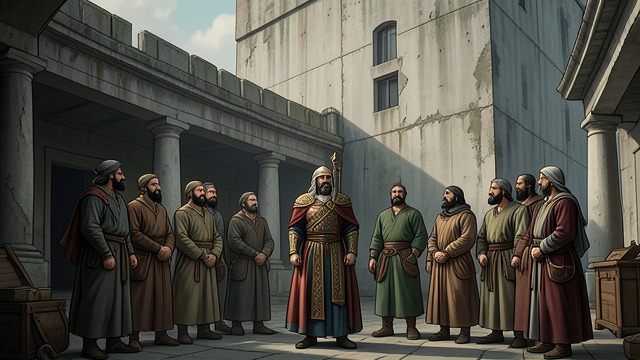
Influence Needs Mutual Trust
Followers can create danger
The fourth line depicts a person obtaining adherents, a situation that might threaten the ruler. Legge says sincerity and visible loyalty prevent the relationship from becoming an error.
A bond can become politically unstable when it gathers private power.
A ruler fosters excellence
The fifth line presents the ruler as sincere in encouraging what is good. The resulting allegiance is not extracted by force but earned through conduct.
The relationship works when authority and loyalty reinforce rather than displace each other.
Sincerity Reaches Beyond the Living

A Bond of Shared Reverence
A ruler makes an offering
The final line depicts the king using sincere adherence to present offerings on a western mountain. Legge reads the act as the culmination of a relationship grounded in what is right.
The influence of a good leader reaches both people and spiritual beings.
Following finds its highest form
The bond is no longer simply between a leader and followers. It becomes a shared commitment expressed through ritual and memory.
The sequence resolves in allegiance made meaningful by sincerity rather than compulsion.
At the first line of Following
At the second line of Following
At the third line of Following
At the fourth and fifth lines of Following
At the topmost line of Following
